A Useful Assessment Starts With Your Building
A fire risk assessment should explain how a fire could start, who could be affected and whether the existing precautions are suitable. For a facilities manager, its value is in the decisions it supports: which defect needs attention first, which records are missing and whether a change of use has altered the risk.
We scope fire risk assessment enquiries around the premises rather than a generic checklist. Tell us whether you manage an office, shop, school, workshop, warehouse or a building with several commercial occupiers, and whether you need a new assessment or a review of an existing report.
A single open-plan workspace and a multi-floor building with shared stairs require different levels of investigation. Access restrictions, concealed construction and missing information should be stated in the agreed scope and recorded as limitations rather than treated as evidence that everything is satisfactory.
When To Arrange An Assessment
Arrange an assessment when taking responsibility for commercial premises, where no suitable current assessment exists, or when the existing document no longer reflects how the building is used. Changes to partitions, occupancy, storage, machinery or escape routes can all be reasons to revisit the findings.
A fire, near miss, significant equipment defect or concern raised during an inspection also deserves attention. Keep the assessment under regular review and revise it when necessary rather than assuming that a date on the front cover makes it valid for a fixed period.
Your Responsibilities And The Legal Framework
The Regulatory Reform (Fire Safety) Order 2005 is the main framework for general workplace fire safety in England. The responsible person must have a suitable and sufficient assessment and keep a written record of it, as explained in GOV.UK fire risk assessment guidance.
An external assessment supports the responsible person but does not transfer their duties. In a shared building, agree how your own arrangements connect with those of the landlord, managing agent and other occupiers, especially where a single escape route or alarm serves several businesses.
How The Assessment Is Put Together
Before the visit, gather floor plans, the previous assessment, alarm and lighting records, fire door information and any outstanding action list. Name a contact who understands the building and can explain opening hours, unusual processes and the needs of anyone who may require help to evacuate.
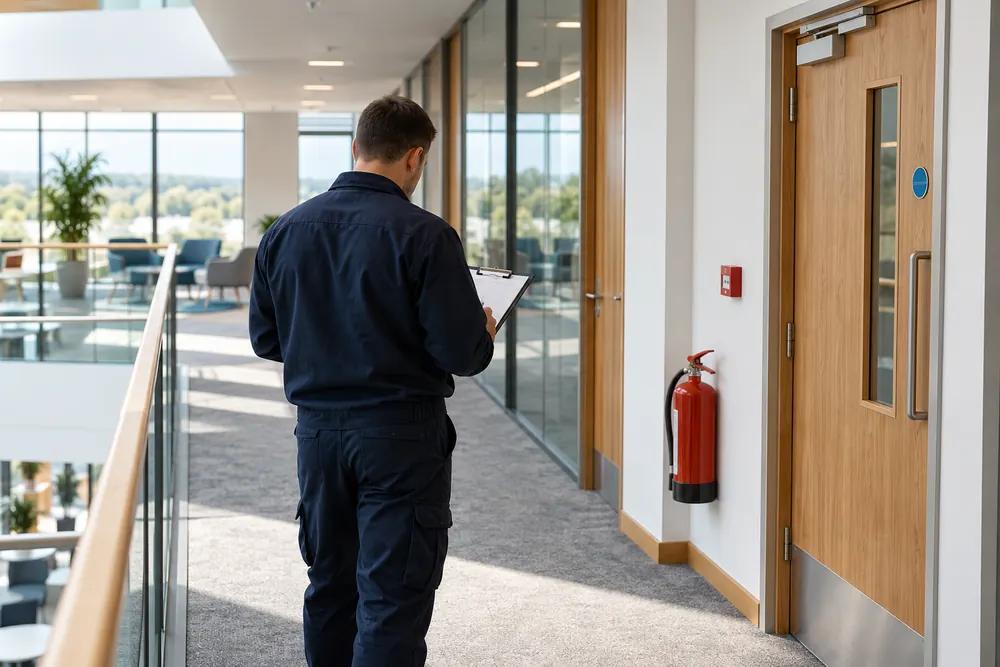
During the inspection, the assessor considers ignition sources, combustible materials, people at risk, escape arrangements and management procedures within the agreed scope. Discuss areas that cannot be reached, locked rooms and changes planned for the coming months so the report records the real constraints.
The written findings should distinguish observations from assumptions and explain the action required. Ask for priorities and a usable description of each location, then allocate an owner and record progress against the actions rather than filing the report without follow-up.
Pricing A Brighton Fire Risk Assessment
The quotation depends on floor area, number of buildings and levels, complexity of use, occupancy and the quality of existing information. A site with specialist processes or several independently managed spaces may require more preparation and discussion than a straightforward office.
Clarify whether the fee includes a return visit, a review of completed actions or discussions with other dutyholders. Intrusive investigation, detailed fire engineering, equipment servicing and a separate fire door inspection should be identified as distinct work when required.
Information Worth Checking Before The Visit
Agree which parts of the premises will be inspected and whether the assessment includes separate buildings, external escape routes and shared circulation areas. Ask your contact to arrange access to plant rooms, stores and other spaces that may otherwise be overlooked during an ordinary tour.
Tell the assessor about temporary arrangements as well as permanent activities. Contractors working overnight, stock held during busy trading periods and a planned change to the number of people present can all be useful context for the visit.
If an earlier report contains unresolved actions, send that list before the appointment. This allows the new review to distinguish a repeated observation from a completed repair and makes the resulting action plan easier to manage.
Turning Findings Into Action
Make the action plan part of your normal building management. Keep photographs, repair records and revised procedures together, and check that the person completing each action understands what evidence will demonstrate it has been addressed.
If the assessment identifies concerns with detection or escape lighting, use the findings to brief fire alarm installation or emergency lighting testing. Ask questions where a recommendation is unclear before commissioning changes to the building.
About Risk Assessments
How Often Should A Fire Risk Assessment Be Reviewed?
A fire risk assessment should be reviewed regularly and when there is reason to think it no longer reflects the premises. Changes to use, staffing, layout or fire precautions can trigger a review. There is no single expiry period that suits every commercial building, so agree a review approach that reflects the actual risks.
What Will I Receive After A Fire Risk Assessment?
A fire risk assessment should provide written findings, the scope and limitations of the inspection, and an action plan. Look for locations you can identify and recommendations you can assign to a responsible person. Before booking, ask whether follow-up advice or a visit to review completed actions is included in the quotation.