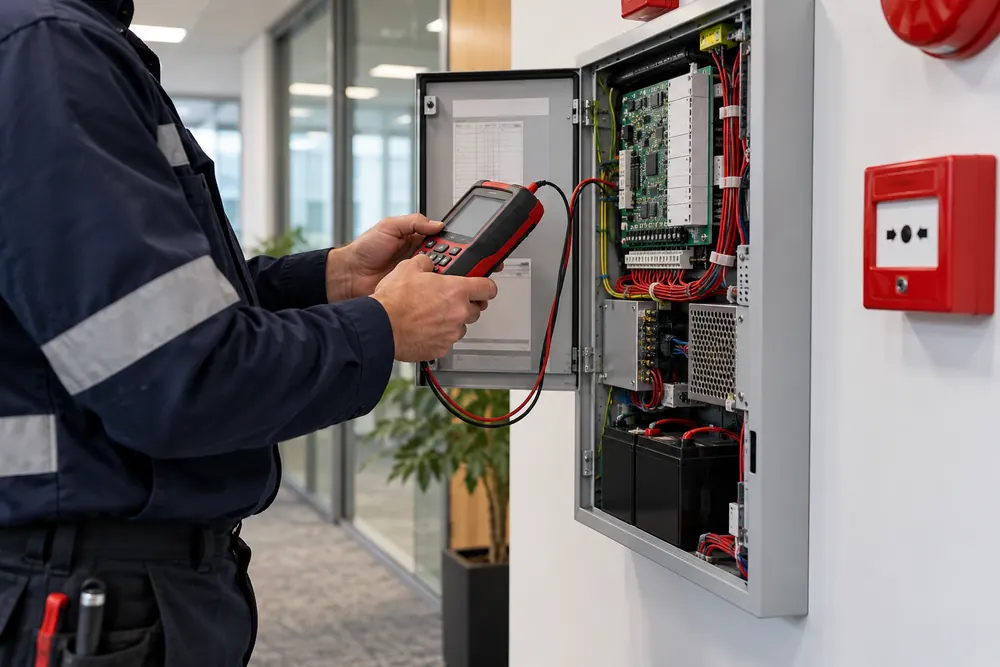
Servicing That Looks Beyond The Panel
Fire alarm maintenance should establish whether the system remains capable of doing its job in the building as it is used today. A panel showing a normal condition is useful, but it does not demonstrate that every detector, sounder and linked device has been properly checked.
We scope maintenance enquiries for offices, schools, workshops and managed commercial buildings in Brighton. Include the manufacturer, system type and any recent fault messages if known, together with the date and scope of the last service.
Where records are missing, describe what is available rather than guessing the installation history. A takeover review can identify the information needed to maintain the system and explain any limitations that affect the first visit.
When To Request A Service Or Fault Visit
Arrange planned maintenance according to the system requirements and risk assessment, and seek advice when faults or repeated unwanted alarms arise. Changes to rooms, dust-producing works or equipment positioned beneath detectors can affect an otherwise familiar installation.
If the panel reports a fault, follow your building procedures and have the loss of protection assessed promptly. Do not assume that silencing a buzzer resolves the problem, and avoid disabling detection simply because it interrupts work.
Standards And Maintenance Responsibilities
BS 5839-1:2025 covers maintenance as well as design and installation of commercial fire detection and alarm systems. The maintenance scope should take account of the system documentation, manufacturer instructions and any variations recorded at installation or later modification.
The Regulatory Reform (Fire Safety) Order 2005 requires relevant fire precautions to be maintained in working order. GOV.UK equipment guidance also distinguishes regular checks and fault records from simply having equipment installed.
What Happens Before And During A Visit
Before a visit, identify the person who controls the alarm, any monitoring connection and the people who need warning about testing. Share restrictions such as examinations, clinical activity, sensitive production processes or an area that cannot be entered without an escort.
The engineer reviews the logbook, recent false alarms and outstanding defects before inspecting and testing the equipment within the agreed service plan. The testing programme should identify what has been checked so successive visits provide a traceable maintenance history.
Power supplies, batteries, detectors, call points and alarm devices need appropriate attention, with linked functions considered where they fall within scope. Confirm how monitoring and building interfaces will be managed during testing, then check that the system is returned to its intended operating condition.
Understanding The Service Report
A useful report identifies the installation, visit date, work undertaken, limitations and defects found. Ask for a clear distinction between work completed during the visit and recommendations that need separate approval, especially where a fault reduces protection.
Use the report to update the building logbook and give outstanding actions to a named person within your organisation. Where a device cannot be tested because access is blocked, arrange access rather than allowing the omission to repeat without a plan.
Routine User Tests And Specialist Servicing
User checks and professional servicing perform different roles. The person responsible for the building should understand the agreed routine testing procedure, how to warn occupants and how to record the outcome without unintentionally leaving the system isolated.
Ask the maintenance provider to explain the programme applicable to your installation. A service contract should state visit frequency, coverage and arrangements for faults, rather than relying on an assumption that every call-out or replacement part is included.
Allowances In An Alarm Maintenance Quote
System size, device count, manufacturer support, access requirements and the quality of records influence the quotation. Sites with several panels, radio devices, unusual interfaces or strict working-hour restrictions need a scope that reflects those features.
Confirm the price basis for replacement batteries, damaged devices, investigations and visits outside the planned schedule. If recurring faults suggest a design or equipment problem, a review of alarm upgrade options may be more useful than repeated component changes.
Prepare Your Brighton Enquiry
Tell us the postcode, premises type and whether you need a planned contract, a service takeover or investigation of a specific issue. Photographs of the panel and available records can help establish the starting point, but do not open electrical enclosures to obtain them.
If you are managing several buildings, list them individually with their access contacts and known system types. This supports a consistent reporting approach while keeping the actual condition and outstanding actions for each site clear.
About Alarm Maintenance
Does A Routine Alarm Test Replace Maintenance?
A routine fire alarm test does not replace specialist maintenance. User tests help identify obvious operational problems and keep staff familiar with the warning, while servicing examines the system under an agreed technical programme. Keep both sets of records together and ask the engineer to explain any gaps in the maintenance history.
Can You Take Over An Existing Alarm System?
Fire alarm maintenance can be considered for an existing installation after its equipment, records and condition are reviewed. Share the manufacturer, panel photographs and previous service information if available. Access codes, obsolete components and missing drawings can affect what is possible, so the takeover scope and any initial investigation should be agreed first.